
Barbara Ayozie Fu Safira on
Creativity, Photography, Identity, Values,
Spirituality and Art Expression
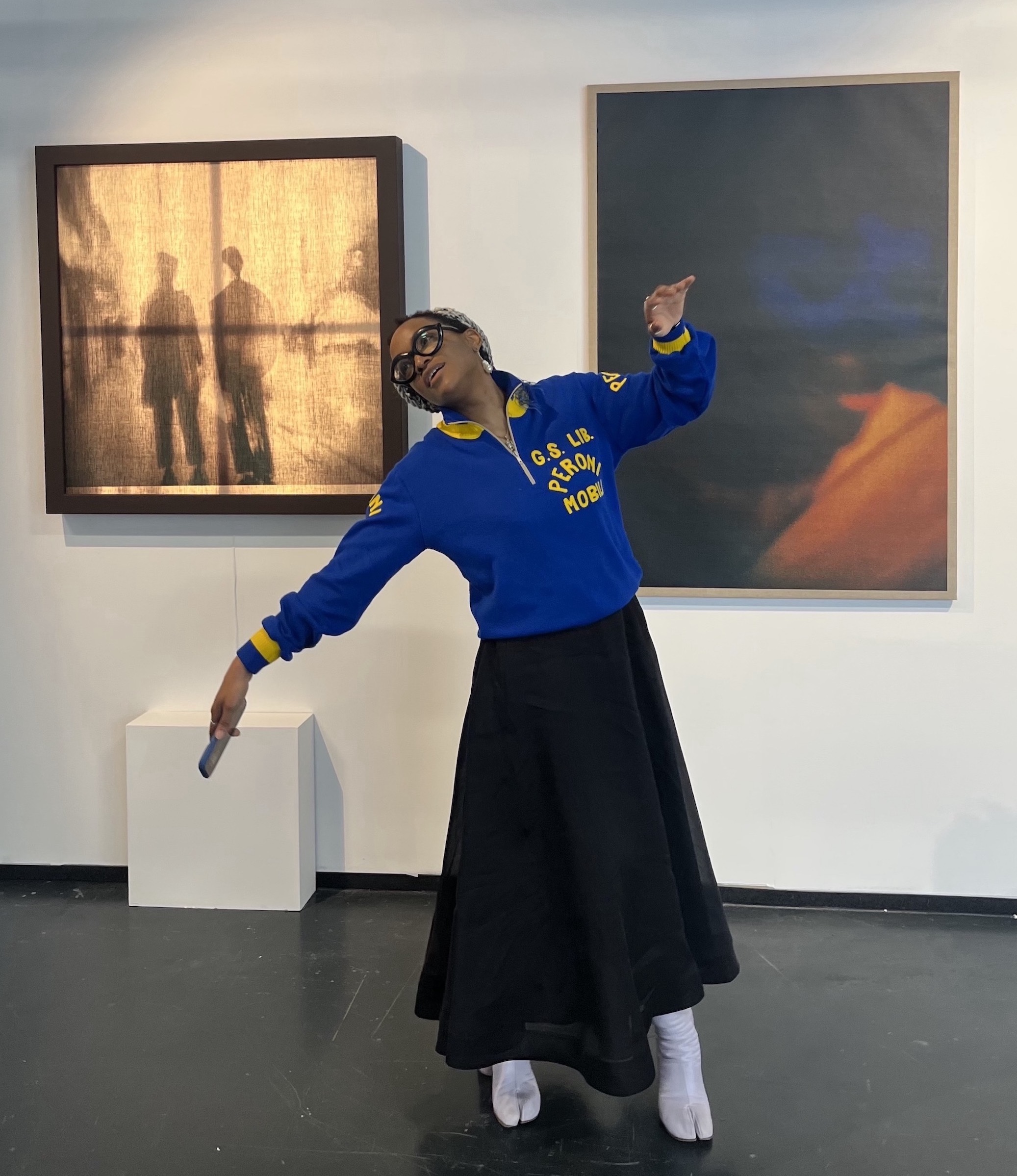
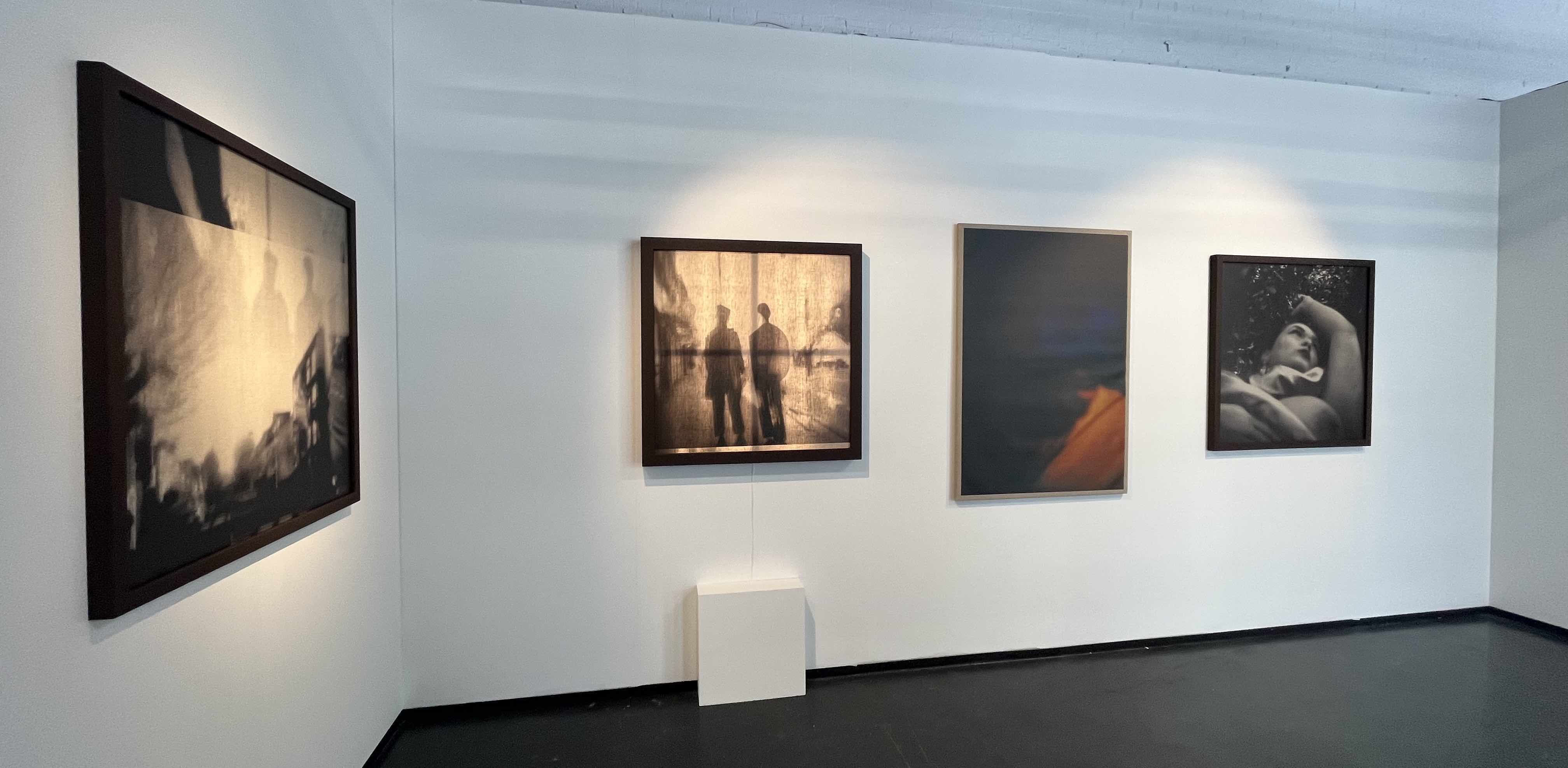
Barbara Ayozie Fu Safira, pictured at Photo London 2026, at the 'Positions' section curated by Maria Sukkar, with the artist's works Two Souls, 2026, from the series Creed: A Doctrine of Presence, 2026, Archival photograph (2017), medium -format linen on canvas, and Barbara Ayozie Fu Safira, A Man from the Stars, 2024, from the series Blue Prayers, 2025, Linen on Canvas
Multidisciplinary artist Barbara Ayozie Fu Safira is a painter, photographer, a stylist, creative director and costume designer for film, TV and fashion, and has consulted for many creative companies including Channel 4, Netflix, BET, Chanel, Quincy Jones PD and many more. She has styled fashion shows at London Fashion Week and has produced photoshoots and drafts fashion editorials for Vogue, Elle, Aesthetica Magazine and other publications.
Barbara Ayozie Fu Safira is drawn to creativity, quality, aesthetics, sentiments, values, and spirituality, exploring through her art and photography, identity, memory and emotions. Her latest body of work—her photography was shown at Photo London 2026 with ‘Positions’ curated by Maria Sukkar.
The artist’s photographs bring together all of her creative expertise, her heritage, creative flair, artistic expression and the way she sees the world.
A blurring of time washes across Barbara Ayozie Fu Safira photographic work, with references to History of Art, to Renaissance-informed philosophy, to a sense of romanticism, all of which she captures in the contemporary, feelings and expression work their way through the image breathing out poetic elements, connecting to the soul, on what lies beyond any possession.
Light, spirituality, identities, reverie embody Barbara Ayozie Fu Safira alluring photographic works that were shown at Positions, Photo London 2026, creating artistic images outside of time and space.
We spoke to Barbara Ayozie Fu Safira on her graceful photography, her journey into the creative world and her dedication to meaningful art and spirituality.
What first ignited your interest in creativity, the arts, fashion and then in photography?
From an early age I’ve always been very expressive; when I started school, I wasn’t captivated that much by any subject but I was always intrigued by art, and my attention would stay focused whenever I had an art lesson, it was something I really enjoyed.
In Italy, much of the art that was taught to us was the Italian and European movement and period; Renaissance, Rococo, Romanticism, Modern Art, Impressionism— but always related to sociopolitical elements; art always went hand in hand with the development of humanity, and I really loved to learn how humanity reflected or responded to what society was going through.
What attributes does photography hold for you that make it a good tool for your creative expression?
I’m classically trained, and so for me the highest pinnacle of art in terms of technique and the way they managed to show clarity in their vision, are The Masters. I’ve always aspired to be able to express my vision at that same level.
I studied graphic design in Italy with six years of psychology, alongside training in drawing, painting and photography. Back then, I was never really that interested in photography, it was fun but it didn’t impact me then as much, however forward to 2020, I was working in London in a shoe shop alongside going to university or about to go, and a man walked into the shop holding a medium format camera from 1956, I am a very curious human being and he saw me picking it up and said to me that I was holding the camera like a child, that it was a gift and that it will take me far. I remember how super happy that made me.
It was like destiny,
Yes completely, and from there I started taking pictures. The beauty of shooting in analogue is that when I would develop the film, I would be surprised by the way I saw things, for the first time I saw the way I see the world, and that both inspired me and took me aback; and that’s how it all started.
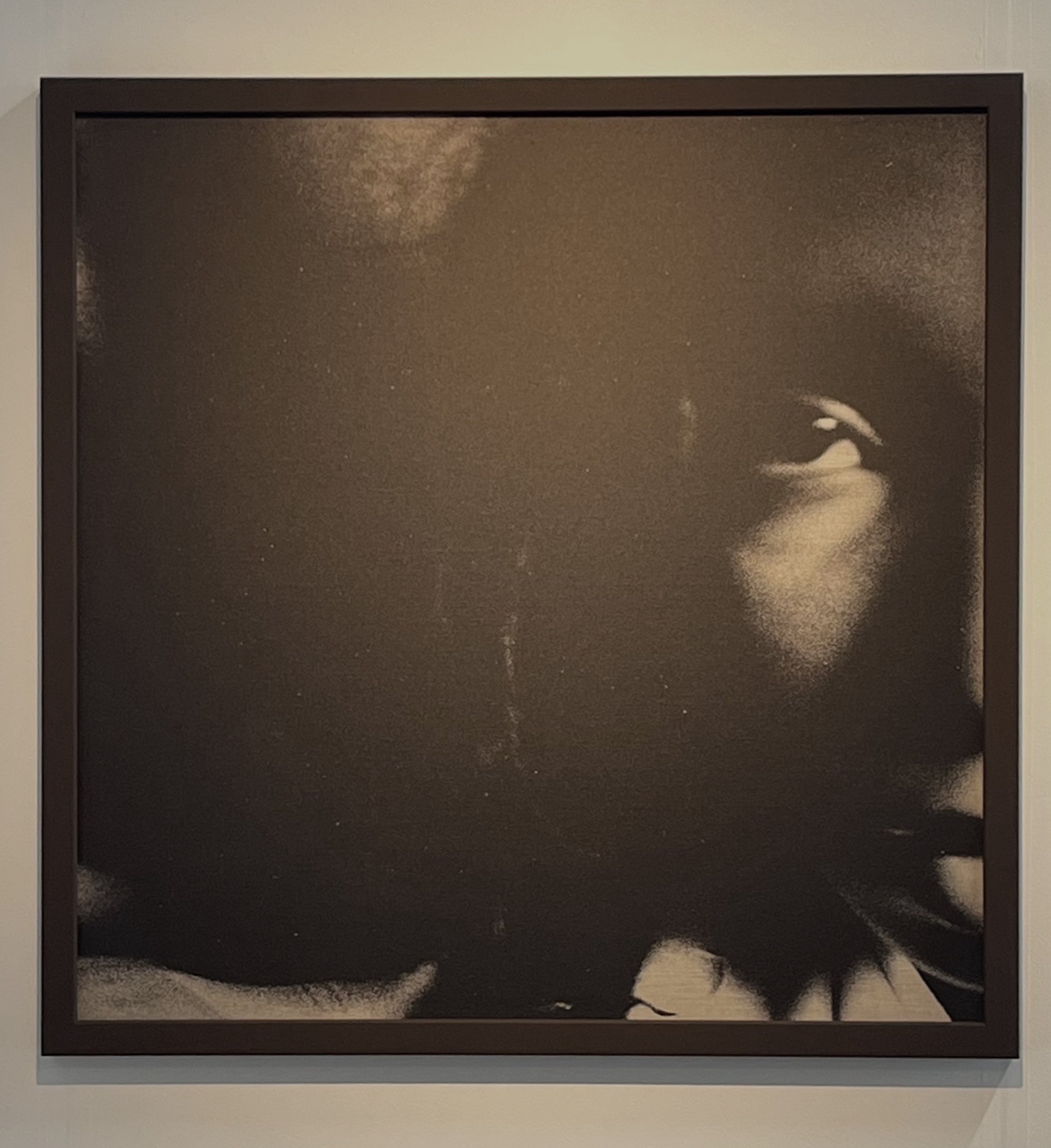
Barbara Ayozie Fu Safira, Blue and Yellow: A Tagliato—Her Gaze, 2026, from the series Blue Prayers, 2025, Analogue photography, linen on canvas, pictured at Photo London 2026, Positions curated by Maria Sukkar
You've worked in fashion, tell us a little about the link you find between your fashion background and how you use that now into your photography work?
Everything is bespoke. I’m Italian and Nigerian, I grew up in the 1990’s with no concept of fast fashion, but rather visiting boutiques and working with seamstresses. In Italy, fashion houses like Prada, Gucci, Valentino are what I saw, and on my Nigerian side, our culture is that we love our dresses, it’s so important, we pick our fabric and seamstresses make our dresses or outfit, there’s lots of colour and it’s a family affair. This bespoke quality is in my blood, so i’m bringing into my work all those elements.
I started working in fashion as a stylist and art director and then from there I worked on my own art, and so of course I’m very led by the concept of beauty, aesthetics, and quality over quantity.
In the photograph I took Michelangelo, Ode to Fertility, I draped and dressed the lady into a blue satin, so it’s all really intertwined.
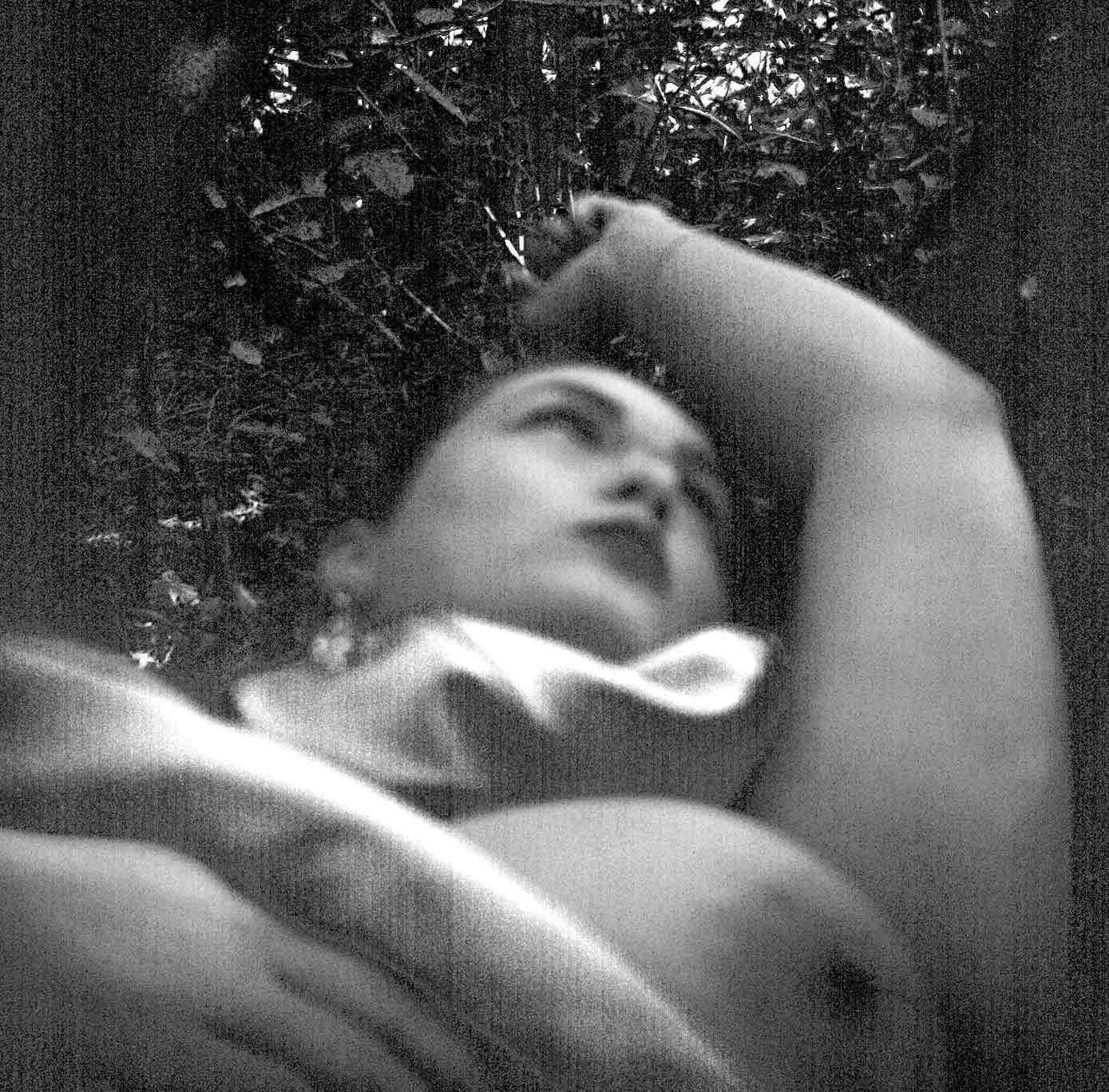
Barbara Ayozie Fu Safira, Michelangelo, Ode to Fertility, 2026, from the series Creed: A Doctrine of Presence, 2026, Archival photograph (2017),
medium -format linen on canvas
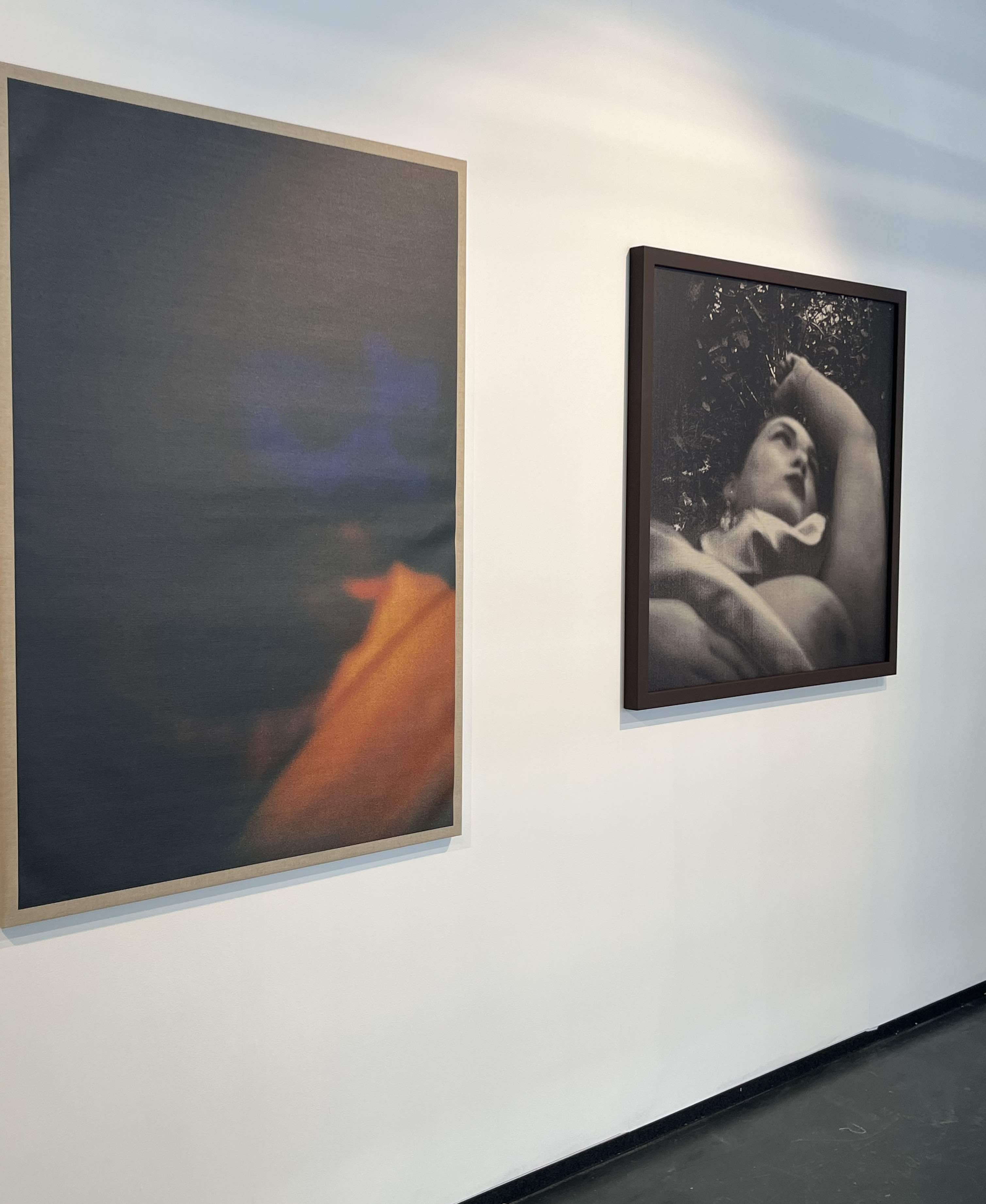
Barbara Ayozie Fu Safira, A Man from the Stars, 2024, from the series Blue Prayers, 2025, Linen on Canvas,
Barbara Ayozie Fu Safira, Michelangelo, Ode to Fertility, 2026, from the series Creed: A Doctrine of Presence, 2026, Archival photograph (2017),
medium -format linen on canvas, pictured at Photo London 2026, Positions curated by Maria Sukkar
The body of work that you showed at Photo London 2026, can you tell us about that?
I showed five images, four of them were shot with a medium format camera from 1956 and one I captured with a camera from the 1980’s.
There’s something really beautiful about medium format because you really need to pause when working with that type of camera. With a 35 mm, you still need to be present and be able to capture the moment, however with medium format which I've used for most of the images that were on show, your body position changes when capturing an image, as in one really needs to be still, almost as if you are the camera itself.
The five images represent a doctrine of present, the values that I stand for that stem from of my upbringing.
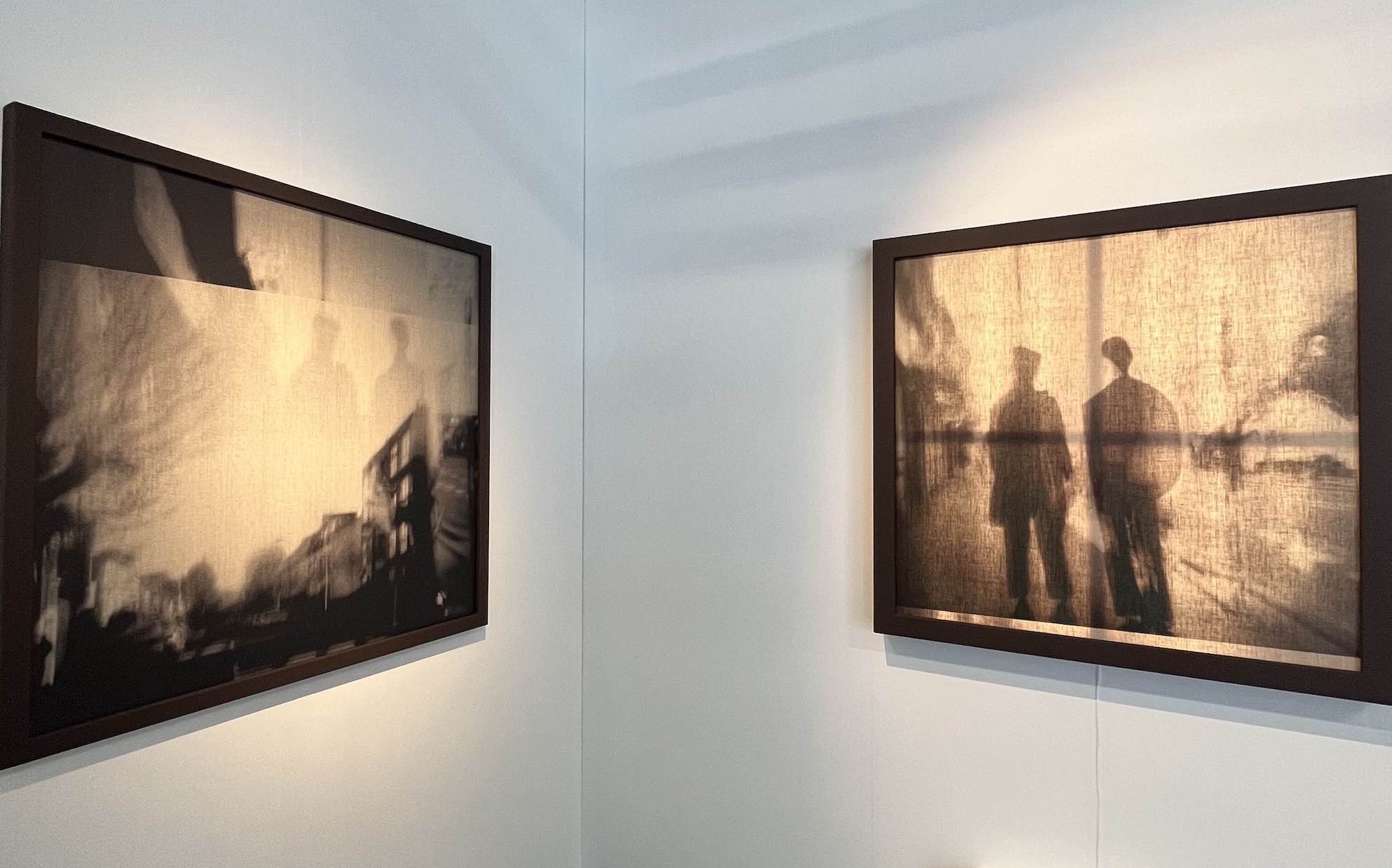
Barbara Ayozie Fu Safira, Falling In Love Again, 2026, from the series Creed: A Doctrine of Presence, 2026, Archival photograph (2017), medium -format linen on canvas,
Barbara Ayozie Fu Safira, Two Souls, 2026, from the series Creed: A Doctrine of Presence, 2026, Archival photograph (2017), medium -format linen on canvas, pictured at Photo London 2026, Positions curated by Maria Sukkar
You have previously mentioned, spirituality and expression in relation to your art
Yes completely because I feel I’m a spiritual being having a human experience. I look through the eyes of the soul. Religion is a big part of my life, of my upbringing. I believe in God and I feel that I am a vessel of God. I’m a first generation Nigerian Italian, I’ve lived all my life with these two cultures, always questioning identity and belonging, I have been fortunate to be able to walk into rooms where a lot of black women never had a chance to, so I thought that God has given me this, almost as a bridge between cultures. I am an observant as much as an anthropologist and I always say that when I walk into any room I walk as a student and then I can leave as a teacher, but I always choose to walk as a student, even if I could be a teacher because we can always learn.
That’s all present in my photography series, the research and the depth of understanding humanity and then trying to give back through my work my perception of an observant and an outsider but also of someone who is in,— in the rooms.
https://barbarafusafira.com https://photolondon.org/positions/